SaaS Application Testing: A Complete Guide for Businesses in 2027
 Niranjan Limbachiya
SaaS application testing is the process of checking cloud-based software for functionality, security, performance, reliability, compatibility, and scalability. It is especially important for SaaS businesses because applications are frequently updated, run in dynamic cloud environments, and serve multiple customers/tenants.
Table of Contents
As cloud software demand grows in 2027, SaaS application testing helps businesses ensure their applications remain secure, reliable, and efficient. Professional SaaS testing services can detect bugs, enhance performance, and secure user information. This guide examines important processes & trends in SaaS based application testing and how it can assist businesses to provide better software.
Reports that the global software testing market was valued at $49.4 billion in 2025 and is projected to reach $93.2 billion by 2033. This is useful statistical evidence for explaining the growing importance of software quality assurance
SaaS application testing is the process of testing cloud-based software to verify its functionality, security, performance, and reliability. It’s all about multi-tenant systems, Browser support, API integrations, and Cloud infrastructure.
Manual and automated testing are used by QA engineers to create real user interactions, ensure data security, and validate application performance under various workloads.
SaaS testing is different from traditional software testing in that it allows for frequent updates, dynamic cloud environments, and continuous deployments. When working with seasoned SaaS application testing, businesses can make sure their software is top-notch and provides a consistent user experience.

Through systematic software testing, the number of defects in production is significantly reduced, thus avoiding unexpected system downtime. Through early identification of functional bugs, software development teams ensure the stability of their application and provide reliable digital tools to their customers.
Sensitive customer data, financial data and corporate records are processed on cloud platforms every day. Targeted SaaS application security testing safeguards critical user information from cyber threats and delivers total compliance to the ever-changing and global data protection regulations, such as GDPR, HIPAA, and SOC 2.
Any user interface that is slow and buggy will lose users to the competition right away. Thorough user interface and functional testing guarantees smooth navigation, fast reaction times, and unified workflows, directly impacting the customers’ satisfaction and minimizing churn.
Your cloud architecture must be able to manage the rising load of active users as your business grows to 10,000 or 1,000,000. Stress and load testing make sure that your software can handle the load and performs without performance loss or crashes.
To be fast to market is a critical competitive factor in 2027. Automated test pipelines are an effective way to fast-track features, accelerate deployment cycles, and achieve seamless continuous deliveries.
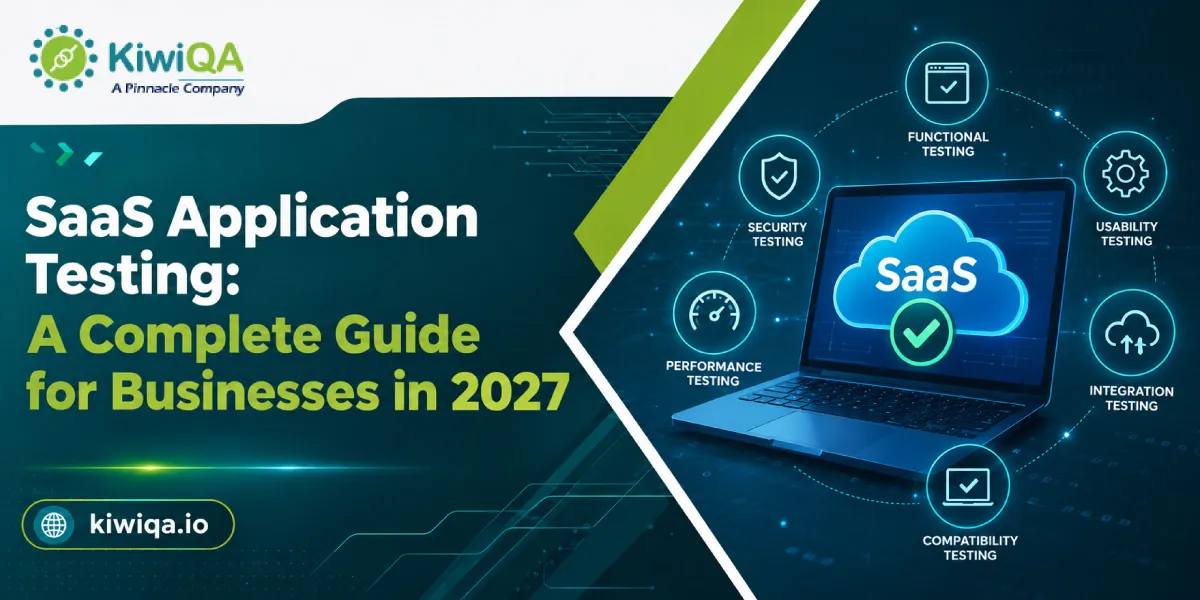
Software development teams use 10 types of key tests to create a fully resilient cloud platform:
Tests business logic workflows, user registration flows, subscription management, and core features to meet software requirements.
Makes application response time, server resource usage and operational stability assessments with high user volume per day.
Recognizes potential vulnerabilities in software, mitigates data breaches, and guards access points to the system. A trusted SaaS testing company provides specialized penetration testers and security analysts to securely end-point clouds.
Loads the system with high peak traffic to test peak system capacity and stresses auto-scaling mechanisms.
Tests REST/GraphQL API connections, ensuring that third-party software integrations on the outside and inside of the system process the data correctly.
Test navigability, visibility and the user journey on various screens, ensuring intuitive navigation.
Evaluates application performance on more than 40 modern browser variations, mobile viewports and OS updates.
Ensures that functionalities of the platform are intact when new code changes are pushed to the repository or architecture changes are done. With the help of modern SaaS automated testing frameworks, regression suites can execute in minutes instead of days.
Ensures that data is separate among multiple customer accounts (tenants), so that company data never gets leaked or is visible on other customers’ cloud servers.
Confirms application security, audit logging, data retention policies meet regulatory requirements.

An end-to-end testing lifecycle needs to be well defined and structured. Here are the 8 fundamental steps:
Determine what your main business objectives are, what your user metrics are, what regulatory obligations are involved, and what key software performance objectives are.
Develop an individual SaaS testing approach that outlines test scope, configurations of environments, priority of risks, tool selection and roles.
Create cloud test servers, database instances and create realistic, anonymous test data.
Create manual and automated test scenarios for user paths, multi tenant security scenarios, and feature workflows.
Perform automated vulnerability scans, SaaS security testing procedures and emulate user load sessions to identify technical weaknesses.
Use SaaS automated testing tools such as Selenium, Playwright, or Cypress to set up automated testing scripts that will automatically run on each build deployment.
Log software flaws to defect tracking systems, assign severity, and re-test the software to verify resolved flaws.
Monitor live production performance, collect user diagnostics, and continually add new features to your QA coverage.
Also Read : Top 15 SaaS Testing Tools for Faster and Scalable QA in 2026
Now, AI automatically generates resilient test scripts, self-heals broken script locators during UI changes and optimizes test effort for maintenance.
QA activities start earlier in the development lifecycle (Shift-Left) and smoothly go into live production monitoring (Shift-Right). An intelligent SaaS testing strategy can help teams identify architectural problems early on in the testing process before release.
The scalable, cloud-based test grid enables teams to run thousands of automated tests simultaneously on a wide variety of devices and browsers, without having to deal with physical hardware.
The machine learning algorithms analyze past bug patterns and code changes to identify high-risk application areas, enabling data-driven testing decisions.
The security test is integrated into automated CI/CD pipelines, creating automatic security gates and regular compliance checks.
With the introduction of cloud products featuring generative AI, QA processes now encompass testing LLM output, checking model accuracy, and data safety.
These 10 strategies will help you establish a successful quality engineering team for agility:
Also Read : A Complete SaaS Testing Approach for Modern Businesses
By conducting SaaS application testing, businesses can ensure software quality and ensure long-term growth. It detects frequent bugs, enhances the stability of the application, and minimizes down time, data breaches, and other operational risks. In-depth testing also guarantees a smooth, quick, and secure user experience, which enhances customer fulfillment and trust. Moreover, it supports development teams to deliver faster updates, secure the brand’s reputation, and scale their cloud applications effectively with the increasing demands and business needs.

A robust QA plan, cutting edge automation and ongoing security analysis are essential to the creation of reliable cloud software. Businesses can count on professional SaaS application testing services to help them discover bugs, secure customer data and publish updates with confidence. Additionally, working with an expert SaaS application testing company enhances general performance, boosts security, and ensures uniformity across gadgets and platforms.
Having comprehensive SaaS security testing will reduce vulnerabilities and safeguard sensitive information. Select trusted SaaS Testing Companies to enhance software quality, facilitate company expansion and ensure the security and performance of cloud applications in 2027 and beyond.

Join the like-minded community & get the latest updates and insights on software testing technological transformation around the globe. Don't miss out.


